
Beyond the Couple: Building Authentic Polyamory and Open Relationships in Queer Community
Your guide to ethical non-monogamy that honors identity, consent, and chosen family bonds
Love Without Blueprints: Redefining Relationships on Our Terms
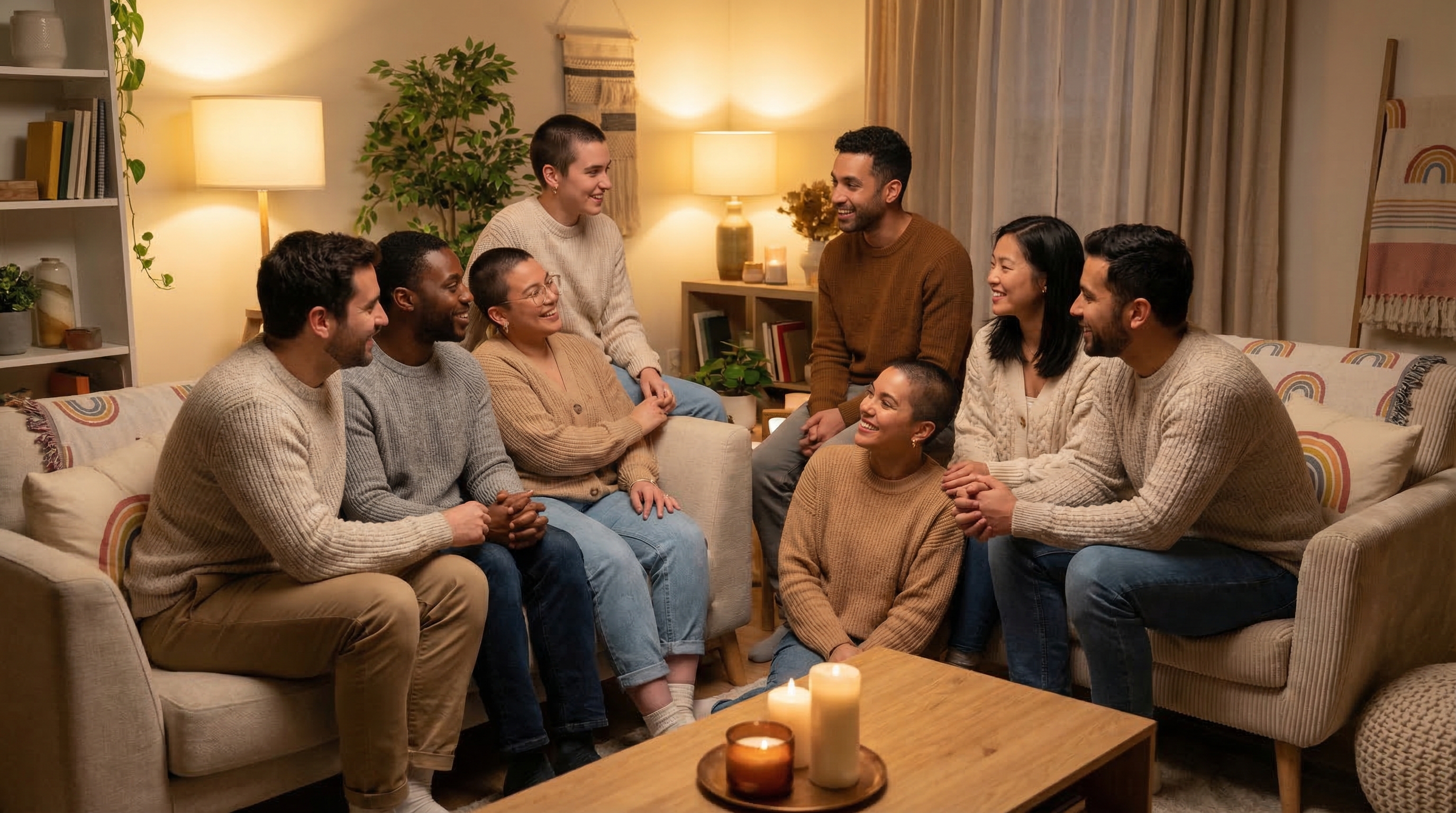
The heteronormative world handed us relationship templates that never fit. Marriage, monogamy, nuclear family—constructs that often feel as restrictive as closets we've already left behind. In queer and alternative lifestyle communities, polyamory dating and open relationship dating aren't just relationship styles; they're acts of liberation, ways of loving that honor our authentic selves and chosen families.
Polyamory and open relationships within LGBTIQ+ spaces carry unique power. When society has already questioned your right to love, creating your own relationship structures becomes revolutionary. These aren't just alternative lifestyle dating choices—they're statements that love exists beyond societal boxes.
The Queer Difference: Why Our Non-Monogamy Hits Different
Our approach to ethical non-monogamy carries distinct advantages born from navigating marginalized identities. We've already done the hard work of questioning norms, coming out, and building chosen families. This foundation creates space for relationship innovation that feels natural rather than rebellious.
Identity-Affirming Love Structures
For trans and non-binary individuals, polyamory can offer multiple sources of gender affirmation. Different partners may see and celebrate different aspects of your identity. One partner might connect with your masculine energy while another celebrates your femme side. This isn't about being different people—it's about being wholly yourself across multiple loving connections.
Genderfluid folx often find polyamory particularly liberating. As your gender expression shifts, having multiple partners means you're not confined to how one person sees or experiences you. Your identity gets to breathe across relationships.
Beyond Binary Relationship Roles
Traditional monogamy comes loaded with gendered expectations—who initiates, who provides, who nurtures. Polyamory dating in queer spaces naturally dismantles these roles. Without predetermined scripts, you get to negotiate what each relationship offers and receives based on authentic connection rather than societal programming.
Consent Culture: More Than Yes and No
Consent in ethical non-monogamy extends far beyond sexual boundaries. It's ongoing negotiation about emotional availability, time allocation, safer sex practices, and identity respect. In queer polyamory, consent becomes a living practice that honors each person's full humanity.
Enthusiastic Consent Across Identities
When dating multiple partners with diverse identities, consent conversations become more nuanced. A partner's pronouns might shift. Someone might be exploring new aspects of their sexuality. Consent means staying present to these evolutions rather than assuming yesterday's boundaries still apply.
Safer Sex as Community Care
STI conversations in polyamorous networks aren't just about individual health—they're community care practices. Regular testing, honest disclosure, and barrier use become acts of love for your entire chosen family network. Many queer poly communities create testing schedules and share results transparently, transforming sexual health into collective responsibility.
Emotional Consent and Compersion
Compersion—feeling joy at your partner's happiness with others—isn't automatic or required. Honest consent means acknowledging when you're struggling with jealousy, need more reassurance, or want to adjust relationship agreements. Your emotional needs matter as much as anyone else's freedom to love.
Communication: The Art of Loving Honestly
Effective polyamory communication goes deeper than scheduling and boundary-setting. It's about creating space where all parts of your identity can be seen, celebrated, and integrated into your relationship network.
The Metamour Connection
Metamours (your partner's other partners) occupy unique positions in queer chosen families. These relationships can become profound friendships, co-parents in chosen family structures, or simply respectful acquaintances. The key is intentional relationship-building that honors everyone's comfort levels.
Some poly networks become tight-knit chosen families where metamours celebrate birthdays, share holidays, and support each other through challenges. Others maintain parallel structures where everyone knows about each other without direct contact. Both approaches are valid when chosen consciously.
Identity Integration Across Relationships
Communicating identity needs across multiple partners requires clarity about what feels affirming versus triggering. Maybe you need one partner to use specific terms during intimacy while another partner connects with you through different expressions. Clear communication prevents partners from accidentally stepping into dysphoric territory.
Time and Energy Negotiations
Unlike monogamous relationships where time scarcity often goes unspoken, polyamory demands honest conversations about availability. This includes emotional energy, not just calendar slots. If you're dealing with discrimination at work, going through gender transition, or facing family rejection, your bandwidth for multiple relationships naturally fluctuates.
Dismantling Hierarchies: Primary, Secondary, and Everything Between
Traditional relationship hierarchies (primary/secondary) can replicate the same power imbalances we've challenged in other areas. Many queer poly practitioners embrace relationship anarchy or non-hierarchical approaches that let connections evolve organically.
Chosen Family Integration
Instead of ranking partners by importance, consider how different relationships serve various chosen family roles. One partner might be your co-parent, another your adventure companion, another your intellectual match. This approach honors the unique gifts each connection brings without forcing hierarchical comparisons.
Resource Sharing Beyond Romance
Open relationship dating in queer communities often includes resource sharing that extends beyond traditional romantic boundaries. Partners might share housing, childcare, financial responsibilities, or caregiving duties based on capability and connection rather than relationship status.
Navigating Challenges: When Love Gets Complicated
Polyamory isn't immune to relationship difficulties. In fact, multiple relationships can amplify existing challenges while creating new ones specific to non-monogamous structures.
Jealousy as Information
Jealousy in polyamorous relationships often signals unmet needs rather than moral failures. Maybe you need more quality time, clearer communication about safer sex practices, or reassurance about your unique place in someone's life. Treating jealousy as data rather than emotion to suppress creates space for addressing underlying concerns.
Coming Out (Again)
Being openly polyamorous can feel like another coming out process, complete with family confusion, workplace concerns, and social judgment. Many LGBTIQ+ individuals find themselves managing multiple layers of identity disclosure—sexual orientation, gender identity, and relationship structure.
Community Navigation
Not all queer spaces embrace polyamory equally. Some LGBTIQ+ communities maintain traditional relationship expectations, creating tension for openly non-monogamous individuals. Finding poly-friendly queer spaces becomes essential for authentic community belonging.
Building Your Poly Network: Practical Steps Forward
Define Your Why
Before seeking multiple partners, explore what drives your interest in polyamory. Are you seeking variety, deeper intimacy, identity exploration, or community building? Understanding your motivations helps communicate needs clearly and choose compatible partners.
Start Small and Honest
Begin with open conversations in existing relationships before seeking new connections. If you're currently monogamous, discuss polyamory as possibility rather than demand. Respect your current partner's timeline for considering relationship structure changes.
Find Your People
Seek polyamory dating communities that celebrate your full identity. Many cities have queer poly meetups, alternative lifestyle dating groups, and online communities specifically for LGBTIQ+ non-monogamous individuals. These spaces provide education, support, and potential connections with people who share your values.
Embrace the Journey
Polyamory is relationship skill-building, not relationship perfection. Expect mistakes, miscommunications, and moments of doubt. The goal isn't eliminating challenges but developing tools for navigating them with integrity and care.
Your Love, Your Rules
In a world that questioned your right to love at all, creating relationship structures that honor your authentic self becomes profound activism. Whether you choose polyamory, open relationships, or any form of ethical non-monogamy, you're expanding possibilities for yourself and your community.
Your identity is your strength. Your love deserves structures that celebrate rather than constrain it. In choosing how to love and be loved, you're not just finding partners—you're building the world you want to live in, one authentic relationship at a time.
Love without limits isn't just possible—it's your right.
Read more
Navigating the Unique Dynamics of LGBTQ+ Dating
Explore the diverse and vibrant world of LGBTQ+ dating dynamics, celebrating identity and fostering connections that resonate.

Rediscovering Love: The Power of Chosen Family in the LGBTIQ+ Community
Explore the transformative power of chosen families within the LGBTIQ+ community and how they redefine love and support.
Trans-Dating: A Fresh Perspective on Connections and Authenticity
Discover how trans dating can redefine connections, affirm identities, and foster incredible relationships within the LGBTIQ+ community.